
Same Day, Weekend, and Evening Appointments Available!
Same Day, Weekend, and Evening Appointments Available!
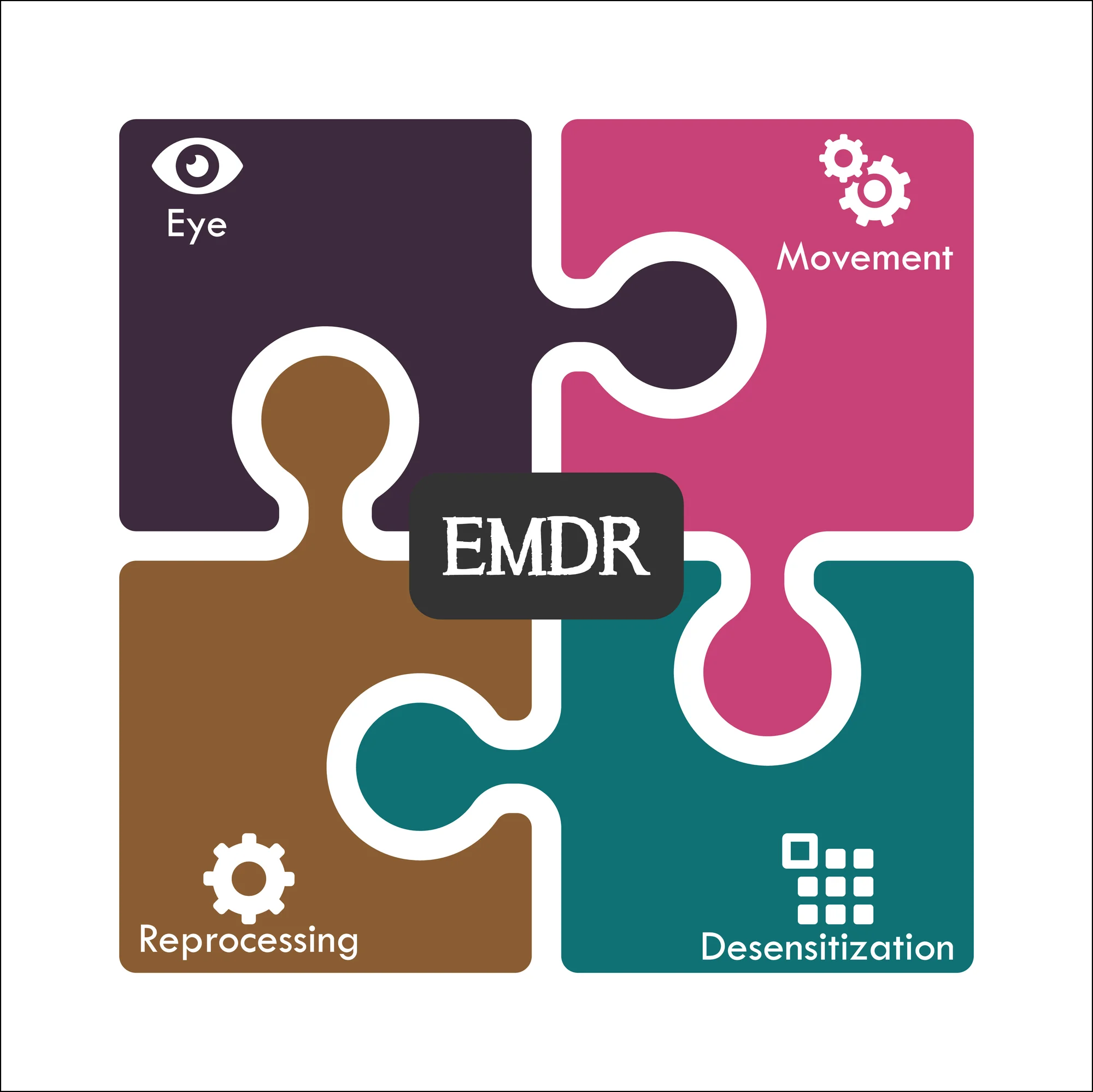
Eye Movement Desensitization and Reprocessing (EMDR) is an evidence-based therapy approach commonly used to help individuals process trauma, anxiety, PTSD, and distressing life experiences. EMDR helps the brain reprocess unresolved memories and emotional experiences so they become less emotionally overwhelming and more adaptively integrated. Many people find EMDR effective because it addresses both the emotional and physiological impact of trauma.
Eye Movement Desensitization and Reprocessing (EMDR) has become one of the most widely searched and sought-after therapy modalities both nationally and in Austin, Texas.
Originally developed by psychologist Francine Shapiro in the late 1980s, EMDR was based on the hypothesis that traumatic experiences can become dysfunctionally stored in the brain when overwhelming stress exceeds our natural ability to process and integrate experience.
In many ways, trauma can be understood as a stuck experience.
Under normal conditions, the brain continuously processes emotional experiences, integrates memories, and adapts to new information. However, when an event is too frightening, chaotic, distressing, or emotionally overwhelming, the nervous system may struggle to fully process what happened.
Instead of becoming a resolved memory, aspects of the experience can remain emotionally and physiologically active long after the danger has passed.
This is why trauma is often experienced not as something that simply happened in the past, but as something the mind and body continue reacting to in the present.
Research on EMDR has demonstrated strong effectiveness in the treatment of trauma, PTSD, anxiety, and distressing life experiences. EMDR helps the brain reprocess unresolved material so it becomes less emotionally overwhelming, more adaptively integrated, less likely to trigger intense reactions, and easier to view from a healthier perspective.
One reason EMDR can feel so powerful is that memories and emotions are deeply interconnected and often non-linear. A present-day trigger may unconsciously connect to earlier experiences, beliefs, fears, or unresolved emotional states stored across different periods of life.
EMDR uses bilateral stimulation, which may include guided eye movements, tapping, or auditory tones. This process appears to facilitate communication between different neural networks and hemispheres of the brain, allowing previously stuck material to become more accessible and processable.
Clients frequently report that memories, emotions, insights, and associations emerge naturally during treatment, helping them better understand and process their experiences.
No. EMDR is not hypnosis. Clients remain fully awake, aware, and in control throughout the entire process. The eye movements used during EMDR are thought to resemble aspects of Rapid Eye Movement (REM) sleep, which plays an important role in memory consolidation and emotional processing.
At Louis Laves-Webb & Associates, we view EMDR as more than a technique. It is part of a larger therapeutic process focused on emotional safety, attunement, and thoughtful pacing. Our therapists help clients work through anxiety, trauma, and unresolved experiences in a way that promotes meaningful healing, emotional resilience, and long-term growth.
Louis Laves-Webb, LCSW, LPC-S
Louis Laves-Webb & Associates
(512) 914-6635
%20(1).png)
August 21, 2026
%20(1).png)
August 18, 2026
%20(1).png)
August 14, 2026
%20(1).png)
August 12, 2026

August 10, 2026
.png)
August 6, 2026
601 West 18th St
Austin, TX 78701
3818 Spicewood Springs Rd
Suite 300
Austin, TX 78759
© Copyright 2024 | Sitemap | Privacy Policy/ Notice to Consumers | Office Policies






.svg)

